Wound Care

544 products

  • Four B. Braun Askina® Gauze Swabs, Plum-Sized, Sterile Pads from B. Braun Deutschland GmbH & Co. KG are arranged together against a plain white background, making them ideal for sterile medical applications.
    Up to 1% off
    Vendor:
    B. Braun Deutschland GmbH & Co. KG

    B. Braun ASKINA® SchlinggaZetupfer Pflaumen -sized sterile

    Only 5 left
    Regular price From ¥323 JPY
    Sale price From ¥323 JPY Regular price ¥323 JPY
  • A Meditrade cotton swab box from Meditrade GmbH contains one package (1 piece), with some of the product visible and partially protruding from the transparent dispenser.
    Sold out
    Vendor:
    Meditrade GmbH

    Meditrade Zulfrodter-Box | Pack (1 piece)

    Regular price ¥3,367 JPY
    Sale price ¥3,367 JPY Regular price ¥3,367 JPY
  • MaiMed-caplast I.V. sterile 8x6cm cannula plaster with wound pad 50x1pc/box | Box (50 pieces)
    Vendor:
    MaiMed GmbH

    MaiMed-caplast I.V. sterile 8x6cm cannula plaster with wound pad 50x1pc/box | Box (50 pieces)

    Only 12 left
    Regular price ¥1,081 JPY
    Sale price ¥1,081 JPY Regular price ¥1,081 JPY
  • Maicell non-sterile 4x5cm cellulose swabs, 2x500 pieces/pack. | Pack (1000 pieces)
    Vendor:
    MaiMed GmbH

    Maicell non-sterile 4x5cm cellulose swabs, 2x500 pieces/pack. | Pack (1000 pieces)

    Only 6 left
    Regular price ¥846 JPY
    Sale price ¥846 JPY Regular price ¥846 JPY
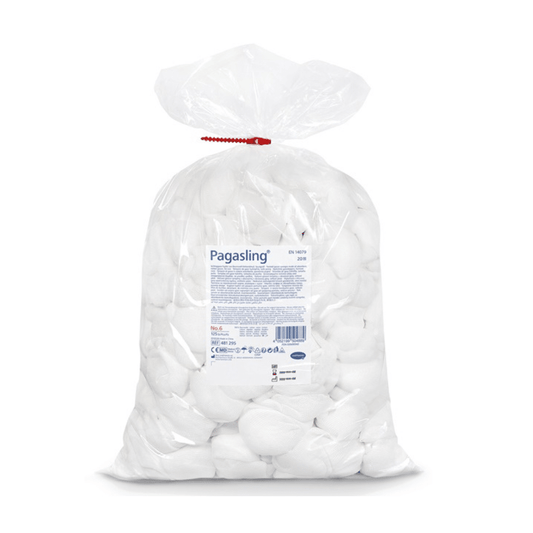
  • A transparent plastic bag labeled “Holthaus Medical GmbH & Co. KG” contains several Temedia non-sterile size 2 gauze swabs, which are spherical and walnut-colored (500 pieces). Some of the cotton balls are poured out of the bag, which is then sealed with a cable tie and placed on a white surface. These medical swabs are ideal for wound care.
    Up to 35% off
    Vendor:
    Holthaus Medical GmbH & Co. KG

    Schlinggazetupfer Temedia Unsteril GR 2, walnut, 500 pieces ball form | Pack (500 pieces)

    Only 8 left
    Regular price ¥3,296 JPY
    Sale price ¥3,296 JPY Regular price ¥5,073 JPY
  • Hartmann Omnistrip Sterile Wound Closure Strips, 3x76 mm | Package (250 pieces)
    Up to 1% off
    Vendor:
    Paul Hartmann AG

    Hartmann Omnistrip Sterile Wound Closure Strips, 3x76 mm | Package (250 pieces)

    Only 9 left
    Regular price ¥4,135 JPY
    Sale price ¥4,135 JPY Regular price ¥4,176 JPY
  • ABE® tricot tubular bandage
    Up to 35% off
    Vendor:
    Meditrade GmbH

    ABE® tricot tubular bandage

    Regular price From ¥288 JPY
    Sale price From ¥288 JPY Regular price ¥288 JPY
  • Maielast-haft smooth elastic fixing bandage, 1 piece/box
    Up to 63% off
    Vendor:
    MaiMed GmbH

    Maielast-haft smooth elastic fixing bandage, 1 piece/box

    Regular price From ¥107 JPY
    Sale price From ¥107 JPY Regular price ¥286 JPY
  • A B. Braun Askina® Brauncel® Dispenser for Cellulose Swabs - Empty by B. Braun Deutschland GmbH & Co. KG is a white plastic dispenser with a transparent lid, designed to hold cotton swabs. Four identical squares on the front facilitate hygienic removal.
    Vendor:
    B. Braun Deutschland GmbH & Co. KG

    B. Braun ASKINA® Brauncel® donor for pulpt -off tubs - empty | Pack (1 piece)

    Regular price ¥5,216 JPY
    Sale price ¥5,216 JPY Regular price ¥5,216 JPY
  • Hartmann Peha-haft Easy Cohesive Bandage, White, 6 cm x 4 m | Package (1 piece)
    Vendor:
    Paul Hartmann AG

    Hartmann Peha-haft Easy Cohesive Bandage, White, 6 cm x 4 m | Package (1 piece)

    Regular price ¥434 JPY
    Sale price ¥434 JPY Regular price ¥434 JPY
  • ABE Last® adhesive, highly elastic fixing bandage, 10 cm x 4 m | Pack (1 piece)
    Up to 35% off
    Vendor:
    Meditrade GmbH

    ABE Last® adhesive, highly elastic fixing bandage, 10 cm x 4 m | Pack (1 piece)

    Only 2 left
    Regular price ¥143 JPY
    Sale price ¥143 JPY Regular price ¥220 JPY
  • Maielast-haft krepp Elastic fixing bandage, 1 piece/box
    Up to 35% off
    Vendor:
    MaiMed GmbH

    Maielast-haft krepp Elastic fixing bandage, 1 piece/box

    Regular price From ¥186 JPY
    Sale price From ¥186 JPY Regular price ¥269 JPY
  • MaiMed-Pad-sterile absorbent compresses
    Vendor:
    MaiMed GmbH

    MaiMed-Pad-sterile absorbent compresses

    Only 26 left
    Regular price From ¥1,786 JPY
    Sale price From ¥1,786 JPY Regular price ¥1,786 JPY
  • MaiMed-VK Pad, wound dressing, non-adhesive, sterile
    Up to 35% off
    Vendor:
    MaiMed GmbH

    MaiMed-VK Pad, wound dressing, non-adhesive, sterile

    Regular price From ¥626 JPY
    Sale price From ¥626 JPY Regular price ¥965 JPY
  • MaiMed-MT-sterile gauze swab
    Vendor:
    MaiMed GmbH

    MaiMed-MT-sterile gauze swab

    Only 21 left
    Regular price From ¥1,895 JPY
    Sale price From ¥1,895 JPY Regular price ¥1,895 JPY

Wound care for hygienic treatment, protection, and controlled healing processes

Wound care encompasses products used for cleaning, disinfecting, covering, and treating wounds. It plays an important role in doctors’ offices, nursing facilities, workplaces, first-aid stations, outpatient care settings, and private households. The goal is to treat wounds hygienically, protect sensitive skin areas, and provide care appropriate to the specific situation.

Our product line includes items for various stages of wound care—from skin and wound cleansing to wound disinfection, as well as sterile wound dressings and other supplies for daily use. Which products are suitable depends, among other factors, on the type and size of the wound, hygiene requirements, the environment, and the manufacturer’s instructions. As part of a structured wound care regimen, products should therefore not be chosen at random, but rather selected to suit the specific application.


Features and Benefits of Wound Care

Wound care products support hygienic procedures and help ensure that wounds are kept clean, protected, and managed in a controlled manner. Depending on the product category, they can be used for skin cleansing, disinfection, coverage, or fluid absorption. This allows different steps in the care process to be effectively combined.

An important advantage lies in targeted selection: Not every wound requires the same care. Different products may be appropriate for minor skin injuries, postoperative areas, sensitive skin areas, or areas under greater stress. It is crucial that the respective products are used properly and selected to suit the specific wound situation.

Typical advantages of wound care products include:

  • enables hygienic application
  • Support for clean work procedures
  • Various product types available
  • Suitable for medical practices, nursing care, and first aid
  • Sterile options available as needed
  • Easy to integrate into care routines
  • Selection based on wound type and application

In practical use, well-coordinated products facilitate structured care. Especially in professional settings, it is important that wound care products are reliably available and integrate seamlessly into existing hygiene and care procedures.


Which wound care products are suitable for which applications?

Ready-to-use solutions can be useful for disinfecting and cleaning smaller wounds or areas of skin near the wound. One example from the product line is the Schülke octenisept® Wound Disinfection Spray. It is particularly suitable for situations where a convenient spray bottle is needed and application must be quick, clean, and precise. The manufacturer’s instructions and guidelines for the specific application should always be followed.

For skin cleansing prior to certain procedures or for hygienic preparation, swabs can be a practical solution. Meditrade alcohol swabs for skin cleansing are ideal for preparing or cleaning small areas of skin. They are particularly practical for work areas with high usage, as they are individually packaged and readily available.

Sterile wound dressings are suitable for covering and protecting wounds. The Hartmann Cosmopor® Sterile Wound Dressing is suitable for the care of wounds that require a sterile covering. Such wound dressings can help protect the wound from external influences and absorb exudate, provided they are appropriate for the specific wound condition.


What should you look for when purchasing wound care products?

When purchasing wound care products, the specific area of application should be considered first. Are you dealing with minor everyday injuries, professional care, clinic supplies, or first aid equipment? Different products may be necessary depending on the application. It is also important to determine whether sterile products are required and what the requirements are regarding hygiene, packaging, and usage.

The type of wound is also a key factor. Size, location, exudate, skin sensitivity, and the planned duration of use all influence which wound dressing, swab, or disinfectant is appropriate. Products should not be selected based solely on package size or price, but rather on whether they are suitable for the intended use and support effective wound care.

In addition, manufacturer specifications, instructions for use, shelf life, and storage conditions should be observed. Especially when it comes to wound disinfection, sterile wound dressings, or products for medical settings, it is important not to assume any properties that are not explicitly stated. Those who provide regular care should also ensure they have appropriate package sizes so that frequently used products remain reliably available.


Wound Disinfection, Swabs, or Wound Dressings—What Are the Differences?

Wound disinfectants are used when wounds or areas of skin near wounds need to be treated hygienically. Depending on the product, they may be available as a spray, solution, or other dosage form. It is important that the application is appropriate for the type of wound and that the manufacturer’s instructions are followed.

Swabs are primarily used for cleaning, preparation, or targeted application on small areas of skin. Alcohol swabs are frequently used for skin cleansing, while other swabs, depending on their design, can also be used for additional hygienic procedures. They are particularly practical when small amounts are needed quickly and precisely.

Wound dressings are used to cover and protect wounds and, depending on the type, to absorb fluid. Sterile wound dressings are particularly important when hygienic coverage is required. The appropriate size and absorbency should be suited to the wound and the intended duration of use.

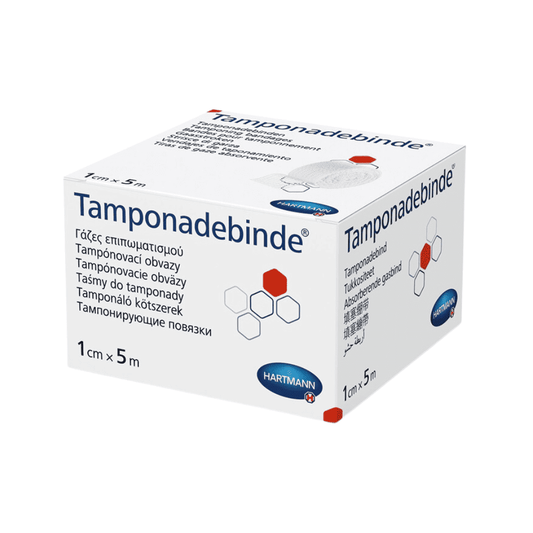
Tamponades are typically used for specific treatment needs, such as when treating cavities, deeper wound areas, or certain medical applications. They should be selected with particular care based on their intended purpose, material, and manufacturer’s instructions, as their use depends more heavily on the specific wound condition.


Application and Guidelines for Wound Care

Wound care products should always be stored in a clean, dry place and in accordance with the manufacturer’s instructions. Sterile products should not be opened until immediately before use. If the packaging is damaged or no longer clearly intact, the product should not be used as sterile. Expiration dates and storage instructions must also be observed.

Before use, it is advisable to wash your hands or wear appropriate disposable gloves if the work area requires it. Wounds should not be touched unnecessarily. For severe, deep, heavily bleeding, inflamed, or poorly healing wounds, qualified medical personnel should be consulted.

After use, used materials should be disposed of properly. In professional settings, additional internal hygiene protocols, documentation requirements, and disposal guidelines apply. Careful use helps ensure that wound care is performed hygienically, traceably, and in a manner appropriate to the specific work environment.


Suitable Supplements for Wound Care

These complementary categories help you expand your wound care supplies in a practical way. First-aid products support rapid initial treatment, while wound dressings, compresses, and adhesive bandages can be used for coverage, securing, or additional protection, depending on the type of wound. Together, they enable well-organized wound care for medical practices, nursing, workplaces, and everyday life.

How is a wound treated correctly?