
-
 Vendor:Haug Bürsten KG
Haug Bürsten Joint brush, 220 x 15 x 50 mm - 1 piece | Pack (1 piece)
Regular price ¥391 JPYSale price ¥391 JPY Regular priceUnit price per¥391 JPY -
 Vendor:Haug Bürsten KG
Haug joint brush brass wire 220 x 15 x 45 mm
Low stockRegular price ¥777 JPYSale price ¥777 JPY Regular priceUnit price per¥777 JPY -
 Up to 8% offVendor:Haug Bürsten
Haug joint brush with stainless steel wire hard 220x15x45 mm | Brush (1 piece)
Low stockRegular price ¥1,419 JPYSale price ¥1,419 JPY Regular priceUnit price per¥1,542 JPY -

 Vendor:Haug Bürsten KG
Haug joint brush narrow PP Ø 0.40 mm hard 228 x 12 x 16 mm, different colors
Regular price From ¥964 JPYSale price From ¥964 JPY Regular priceUnit price per¥964 JPY -
 Vendor:VERMOP
VERMOP adapter for joint brush, as well as ceiling and wall brush | 1 piece
Regular price ¥1,274 JPYSale price ¥1,274 JPY Regular priceUnit price per¥1,274 JPY -
 Vendor:VERMOP
VERMOP joint brush | 1 piece
Regular price ¥3,050 JPYSale price ¥3,050 JPY Regular priceUnit price per¥3,050 JPY


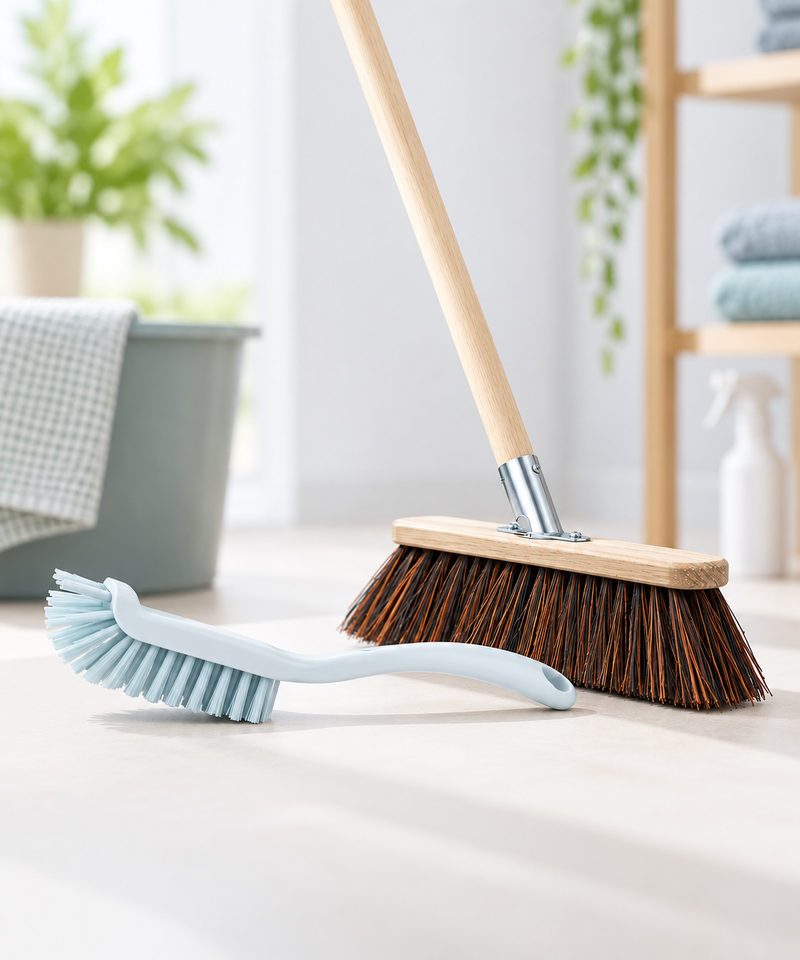


Grout brushes for thorough cleaning of grout lines, edges, and narrow gaps
Grout brushes are used wherever dirt, deposits, or residue needs to be removed from narrow grout lines, corners, and edges. They are suitable for cleaning tasks in restrooms, kitchens, commercial spaces, outdoor areas, and in building maintenance. Especially for tile grout lines, transitions, edges, or hard-to-reach areas, a grout brush can work more precisely than traditional brooms or larger brushes.
Thanks to their narrow shape and firm bristles, grout brushes enable precise cleaning on small surfaces. They are therefore a practical addition to the brooms & brushes category when not only large floor areas but also details and narrow spaces need to be thoroughly cleaned.
Features and Benefits of Grout Brushes
Grout brushes are specifically designed for narrow cleaning areas. Their compact brush shape allows for targeted cleaning of grout lines, grooves, edges, and corners. Depending on the model, they can be used for dry or damp cleaning tasks and help mechanically dislodge stubborn dirt.
A major advantage lies in their controlled application. While larger brushes or brooms are more suitable for surfaces, grout brushes can also reach tight areas where dirt tends to accumulate particularly easily. This makes them suitable for both regular maintenance cleaning and more intensive deep cleaning.
Typical advantages of grout brushes:
- Targeted cleaning of grout lines and edges
- Suitable for narrow gaps
- Helps remove stubborn residue
- Practical for bathroom and kitchen areas
- Useful complement to larger cleaning equipment
- Suitable for commercial and residential use
- Easy to handle for daily cleaning tasks
In everyday work, grout brushes are particularly helpful when hard-to-reach areas need to be cleaned more thoroughly. They complement existing cleaning accessories and ensure that even small details can be cleaned reliably.
Which grout brushes are best suited for which applications?
The Haug Bürsten grout brush, 220 x 15 x 50 mm, is ideal for standard cleaning tasks on tile grout lines, edges, and narrow transitions. Thanks to its narrow design, it is intended for areas where larger brushes are too wide or do not work with sufficient precision.
For heavier or more stubborn dirt
,
a version with particularly robust bristles may be useful. The Haug brass wire grout brush (220 x 15 x 45 mm ) is suitable for applications where tougher residues need to be mechanically removed. Before use, however, you should check whether the surface is suitable for a brass wire brush to ensure that sensitive surfaces are not damagedFor professional cleaning environments where grout brushes are used regularly, the VERMOP grout brushis a suitable option. It is ideal for structured cleaning routines in building maintenance, industrial settings, or facilities where grout lines and edge areas require targeted attention.
What should you look for when buying grout brushes?
When purchasing grout brushes, the intended application should be considered first. Different requirements apply to tile grout in restrooms than to heavier-duty work in workshops, outdoor areas, or commercial spaces. It is crucial that the brush shape and bristle material are suitable for the surface.
The width and shape of the grout brush are also important. Narrow brushes are particularly effective at reaching tight spaces, while sturdier designs can apply more pressure to the area being cleaned. For delicate surfaces, avoid using brushes that are too hard or made of metal.
Other criteria include ease of use, material durability, cleaning effort, and compatibility with existing cleaning processes. In the brooms and brushes category, a sensible combination is important: Large brushes and brooms handle large surfaces, while grout brushes complement detailed cleaning along edges, borders, and grout lines.
Plastic bristles or brass wire—which grout brush is better?
With grout brushes, the range of applications differs primarily based on the bristle material. Models with classic, firm bristles are suitable for regular cleaning tasks on many non-sensitive grout lines and surfaces. They are a good choice when removing dirt without being too aggressive on the surface.
Grout brushes with brass wire are designed for tougher residues and more intensive cleaning tasks. They can be useful on more robust surfaces but should not be used on sensitive materials without first testing them. Caution is especially important with coated, painted, or soft surfaces.
For everyday use, a classic grout brush is often sufficient. For heavier buildup, a more robust version may be appropriate. The choice should therefore always be based on the surface, the degree of soiling, and the desired cleaning intensity.
Usage and Notes on Grout Brushes
Grout brushes should be used with controlled pressure to loosen dirt without unnecessarily straining the surface. For wet cleaning, a suitable cleaning agent can enhance the mechanical effect. The cleaning agent manufacturer’s instructions and the surface’s material compatibility should be observed.
After use, brushes should be rinsed, cleared of residue, and stored in a dry place. This ensures the bristles remain usable and hygienically clean for longer. Heavily worn brushes should be replaced, as damaged or bent bristles cannot work as precisely.
For brushes containing metal parts, special care must be taken to ensure they are suitable for the respective surface. A quick test on an inconspicuous area can help prevent unwanted scratches or surface damage.
Complementary Accessories for Grout Brushes
The following items are suitable as supplements to grout brushes:
These complementary brushes cover a variety of cleaning tasks. Dish brushes are suitable for kitchens and sink areas, pipe brushes for narrow pipes or openings, scrub brushes for more thorough surface cleaning, and toilet brushes for restrooms. Together with grout brushes, they form a practical selection within the brooms & brushes category for thorough cleaning of surfaces, corners, and hard-to-reach areas.


