
-
 Vendor:Pluslife
Pluslife Sars-Cov-2 PCR test kits-10 tests | Pack (10 tests)
Unit price: ¥1,288¥1,288 / pieceRegular price ¥12,881 JPY ¥12,881 JPYSale price ¥12,881 JPY ¥12,881 JPY Regular priceUnit price ¥0 per¥12,881 JPY ¥12,881 JPYplus shipping
Delivery
-
 Vendor:Pluslife
Pluslife Nasal SWAB, nose smear swab - 1 piece
Unit price: ¥1¥1 / pieceRegular price ¥58 JPY ¥58 JPYSale price ¥58 JPY ¥58 JPY Regular priceUnit price ¥0 per¥58 JPY ¥58 JPYplus shipping
Delivery
-

 Vendor:Fluorecare
Fluorecare Sars-Cov-2, Influenza A + B & RSV Antigen Kombi Test, 1 piece | Pack (1 test)
Regular price ¥254 JPY ¥254 JPYSale price ¥254 JPY ¥254 JPY Regular priceUnit price ¥0 per¥254 JPY ¥254 JPYplus shipping
Delivery
-

 Vendor:Pluslife
Pluslife Mini Dock Poc-Nat test device | Pack (1 device)
Regular price ¥50,534 JPY ¥50,534 JPYSale price ¥50,534 JPY ¥50,534 JPY Regular priceUnit price ¥0 per¥50,534 JPY ¥50,534 JPYplus shipping
Delivery
-
 Vendor:CorDx
Cordx 4 in 1 lay-antigen combination test RSV viruses + corona Covid-19 + influenza A + B | Pack (1 test)
Regular price ¥324 JPY ¥324 JPYSale price ¥324 JPY ¥324 JPY Regular priceUnit price ¥0 per¥324 JPY ¥324 JPYplus shipping
Delivery
-
 Vendor:Shenzhen Lvshiyuan Biotechnology Co., Ltd.
Green Spring SARS-CoV-2 Rapid Antigen Test | Pack (25 tests)
Unit price: ¥135¥135 / pieceRegular price ¥3,364 JPY ¥3,364 JPYSale price ¥3,364 JPY ¥3,364 JPY Regular priceUnit price ¥0 per¥3,364 JPY ¥3,364 JPYplus shipping
Delivery
-

 Vendor:Hotgen
Hotgen Sars-CoV-2 Antigen Rapid Test for Home Use CE0123 | Package (1 test)
Regular price ¥198 JPY ¥198 JPYSale price ¥198 JPY ¥198 JPY Regular priceUnit price ¥0 per¥198 JPY ¥198 JPYplus shipping
Delivery
-
 Vendor:Pluslife
Pluslife Sars-Cov-2 / Influenza A / Influenza B test kits (10 tests) | Pack (10 tests)
Unit price: ¥2,358¥2,358 / pieceRegular price ¥23,583 JPY ¥23,583 JPYSale price ¥23,583 JPY ¥23,583 JPY Regular priceUnit price ¥0 per¥23,583 JPY ¥23,583 JPYplus shipping
Delivery
-

 Vendor:Pluslife
Pluslife influenza a / influenza b / rsv test kits (10 tests) | Pack (10 tests)
Unit price: ¥1,962¥1,962 / pieceRegular price ¥19,619 JPY ¥19,619 JPYSale price ¥19,619 JPY ¥19,619 JPY Regular priceUnit price ¥0 per¥19,619 JPY ¥19,619 JPYplus shipping
Delivery
-

 Vendor:Clungene Tests for Diagnostics and Hygiene
Clungene Antigen Rapid Test, 25 Count, AT079/20 | Pack (25 tests)
Unit price: ¥143¥143 / pieceRegular price ¥3,567 JPY ¥3,567 JPYSale price ¥3,567 JPY ¥3,567 JPY Regular priceUnit price ¥0 per¥3,567 JPY ¥3,567 JPYplus shipping
Delivery
-

 Vendor:HighTop
Hightop influenza A/B, RSV, Covid-19 professional Schnelltest-20er Box | Pack (20 tests)
Unit price: ¥295¥295 / pieceRegular price ¥5,906 JPY ¥5,906 JPYSale price ¥5,906 JPY ¥5,906 JPY Regular priceUnit price ¥0 per¥5,906 JPY ¥5,906 JPYplus shipping
Delivery
-

 Vendor:Safecare
Safecare Laientest 5 Series Covid-19 Antigen Rapid Test | Pack (5 pieces)
Unit price: ¥48¥48 / pieceRegular price ¥241 JPY ¥241 JPYSale price ¥241 JPY ¥241 JPY Regular priceUnit price ¥0 per¥241 JPY ¥241 JPYplus shipping
Delivery
-
 Vendor:Pluslife
Pluslife PCR streptococcal a test kit (10 tests) | Pack (10 tests)
Unit price: ¥1,189¥1,189 / pieceRegular price ¥11,890 JPY ¥11,890 JPYSale price ¥11,890 JPY ¥11,890 JPY Regular priceUnit price ¥0 per¥11,890 JPY ¥11,890 JPYplus shipping
Delivery
-

 Vendor:Safecare
Safecare Laientest 1 Series Covid-19 Antigen Rapid Test Kit | Pack (1 piece)
Regular price ¥110 JPY ¥110 JPYSale price ¥110 JPY ¥110 JPY Regular priceUnit price ¥0 per¥110 JPY ¥110 JPYplus shipping
Delivery
-

 Vendor:Altruan
COMBO 9IN1-DVOT Professional Sars-Cov-2, Influenza A+B, RSV, Adenovirus, HMPV, PIV 1/3, PIV 2, Mycoplasma | Pack (1 piece)
Regular price ¥793 JPY ¥793 JPYSale price ¥793 JPY ¥793 JPY Regular priceUnit price ¥0 per¥793 JPY ¥793 JPYplus shipping
Delivery


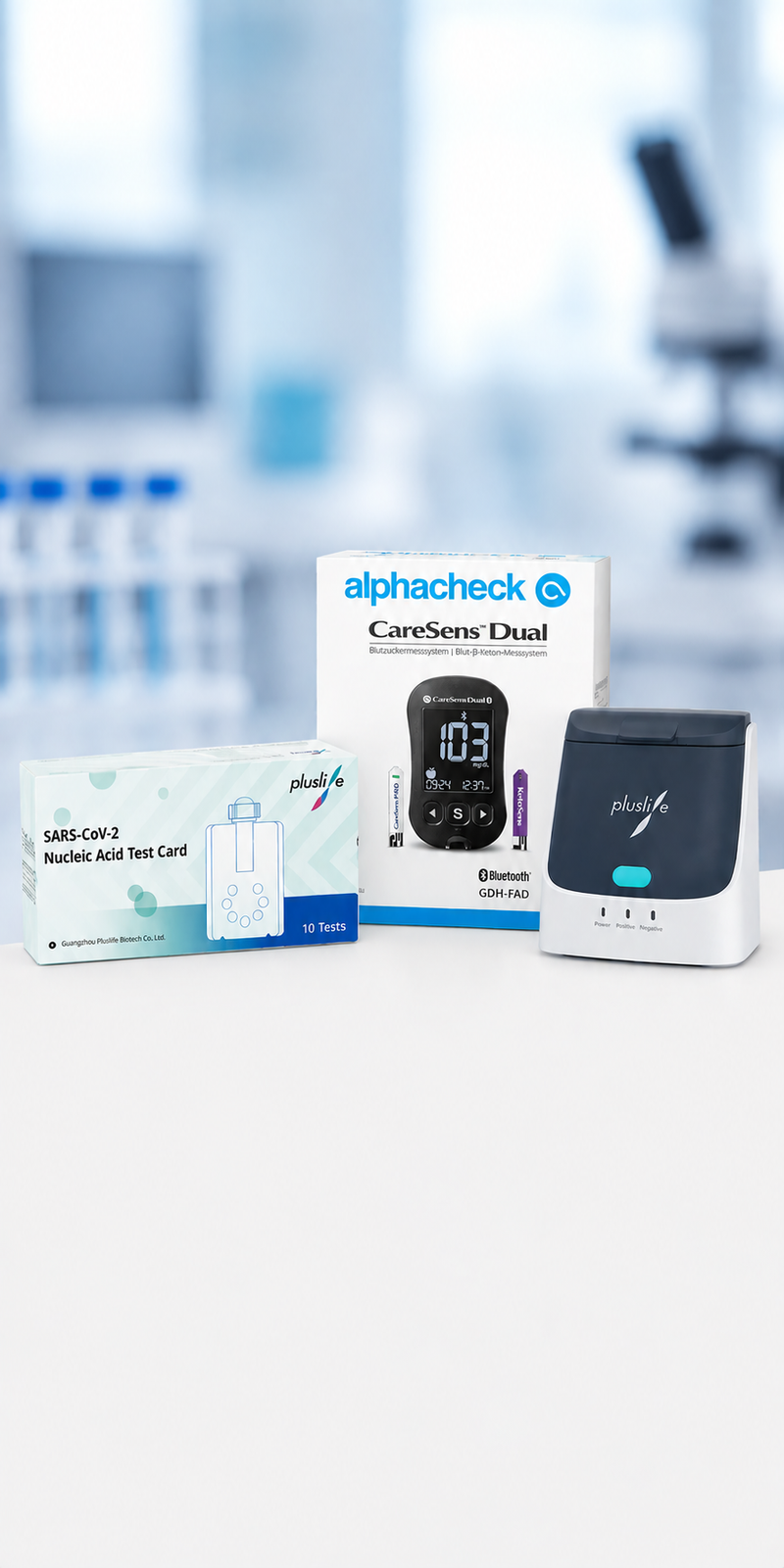


Rapid tests for quick assessment in medical, workplace, and home settings
Rapid tests are used when test results are needed promptly and ease of use is a priority. They are used in medical facilities, long-term care settings, businesses, schools, social service organizations, and in private settings, among other places. Depending on the type of test, rapid tests can help quickly identify specific infections, health indicators, or substances and better assess next steps.
In this category, you’ll find various rapid tests for different applications—from COVID-19 rapid tests to combination tests and tests for specific diagnostic purposes. As part of the Rapid Tests & Diagnostics category, they support a structured, hygienic, and traceable testing process. It’s important to select the appropriate rapid test based on its intended use, testing method, packaging unit, and manufacturer’s specifications.
Features and Benefits of Rapid Tests
Rapid tests are designed to enable straightforward testing with clearly readable results. Many products can be used without complex laboratory equipment and are therefore particularly suitable for situations where a quick initial assessment is needed. The exact application, sample type, and interpretation vary depending on the product.
A major advantage is their easy integration into existing workflows. Whether in everyday work, in medical facilities, or for regular screening tests, rapid tests can help make testing processes more predictable. However, the manufacturer’s instructions should always be followed, as the procedure, storage, and reading time may vary depending on the test.
Typical advantages of rapid tests:
- rapid result display
- easy to use
- clear test interpretation
- suitable for various applications
- Various package sizes available
- Convenient to use outside a laboratory setting
- Easily integrated into hygiene procedures
In practical use, the most important factor is that the rapid test is suitable for the specific situation. In addition to the purpose of the test, the required quantity, frequency of use, and the requirements of the specific setting also play an important role.
Which rapid tests are suitable for which application?
If more than one pathogen is a potential concern—and multiple possible causes need to be ruled out—combination tests are a practical option. The Fluorecare SARS-CoV-2, Influenza A + B & RSV Antigen Combination Test is suitable for situations where symptoms need to be classified differently and multiple infectious agents must be considered simultaneously. This can be particularly helpful during seasonal infection periods.
For applications requiring PCR-based test kits, the Pluslife SARS-CoV-2 PCR Test Kit with 10 tests is a suitable option, for example. Depending on the system and application, such test kits can be an appropriate solution when a testing method other than standard rapid antigen tests is required. Compatibility with the specific device or procedure, as well as the manufacturer’s specifications, are always crucial factors here.
Single tests are better suited for occasional use or smaller needs. Larger packs make sense when testing is done regularly or when multiple people need to be tested. This allows you to better tailor your selection to actual usage.
What should you look for when buying rapid tests?
When purchasing rapid tests, you should first determine what the test will be used for. A test for SARS-CoV-2 serves a different purpose than a combination test, drug test, or health screening. Therefore, the specific intended use is the most important selection criterion.
The type of sample and the method of use also play an important role. Depending on the product, different sample materials may be required. Customers should therefore verify whether the testing procedure aligns with the intended use and whether users are familiar with the process. Equally important are the reading time, storage conditions, and shelf life.
For businesses, medical practices, care facilities, or larger organizations, the package size is also relevant. Individual tests are practical for smaller quantities, while larger packages are usually better suited for regular needs. In the field of rapid tests and diagnostics, care should also be taken to ensure that the test’s purpose, manufacturer information, and existing requirements align.
COVID-19 rapid tests, infection tests, or health screenings—what are the differences?
COVID-19 rapid tests are designed to detect SARS-CoV-2 and are frequently used for rapid testing in private, workplace, or medical settings. They are particularly suitable when a specific assessment of COVID-19 is needed.
Infection tests cover different pathogens or areas of infection depending on the product. They can be helpful when specific symptoms or suspected cases need to be quickly assessed. In this context, it is important to pay close attention to the specified test purpose.
Drug tests serve a different purpose and are used when specific substances need to be detected. In this context, the sample type, detection window, and intended use are particularly critical.
Combination tests screen for multiple parameters or pathogens in a single test procedure. They are useful when symptoms may be similar and various causes are possible, such as with respiratory infections. Health screenings, on the other hand, are geared more toward general health indicators or specific monitoring parameters.
Usage and Guidelines for Rapid Tests
Rapid tests should always be performed exactly according to the manufacturer’s instructions. This includes proper sample collection, the correct amount of sample material, the specified waiting time, and reading the results within the indicated time window. Failure to follow these steps may compromise the reliability of the result.
Before use, check the packaging, expiration date, and storage conditions. Tests should be stored in a dry, clean place in accordance with the manufacturer’s instructions. Disposal should also be carried out hygienically, especially if the test has come into contact with the sample material.
Depending on the product, a rapid test can provide important initial guidance, but it does not replace further medical evaluation in every situation. In the event of symptoms, unclear results, or special requirements, the relevant professional guidelines should be followed.
Complementary Products for Rapid Tests
Supplementary categories can be useful when additional monitoring or detection products are needed alongside rapid tests. Diagnostic products support various testing and analysis areas, diabetes products help with the regular monitoring of relevant values, and microbial indicators can complement hygiene testing processes. This allows the Rapid Tests & Diagnostics category to be expanded in a targeted manner as needed.


