-
Up to 35% offVendor:Holthaus Medical GmbH & Co. KGHOLTHAUS YPSIFLEX® Painting Elastic Mullbinde, 4 m
Regular price From ¥198 JPYSale price From ¥198 JPY Regular priceUnit price ¥57 per m¥303 JPY -
Vendor:Holthaus Medical GmbH & Co. KGHOLTHAUS YPSIPLAST® fingertips, elastic - 50 pieces
Regular price From ¥1,428 JPYSale price From ¥1,428 JPY Regular priceUnit price per¥1,428 JPY -
Up to 33% offVendor:Holthaus Medical GmbH & Co. KGHolthaus first aid miniset-5-part | Pack (1 piece)
Regular price ¥151 JPYSale price ¥151 JPY Regular priceUnit price per¥226 JPY -
Up to 4% offVendor:Holthaus Medical GmbH & Co. KGHolthaus Ypsimed eye flap, with rubber band
Only 16 leftRegular price From ¥352 JPYSale price From ¥352 JPY Regular priceUnit price per¥367 JPY -
Up to 1% offVendor:Beiersdorf AGHansaplast sensitive strips, plaster - 20 pieces | Pack (20 pieces)
Only 9 leftRegular price ¥687 JPYSale price ¥687 JPY Regular priceUnit price per¥694 JPY -
Up to 1% offVendor:BSN Medical GmbHBSN ELASTOMULL® Pick -up Color Fixing bandage
Only 17 leftRegular price From ¥410 JPYSale price From ¥410 JPY Regular priceUnit price per¥410 JPY -
Up to 35% offVendor:Paul Hartmann AGHartmann ideal bandages, without association clips, stretched 5 m long, individually packaged
Regular price From ¥356 JPYSale price From ¥356 JPY Regular priceUnit price per¥546 JPY -
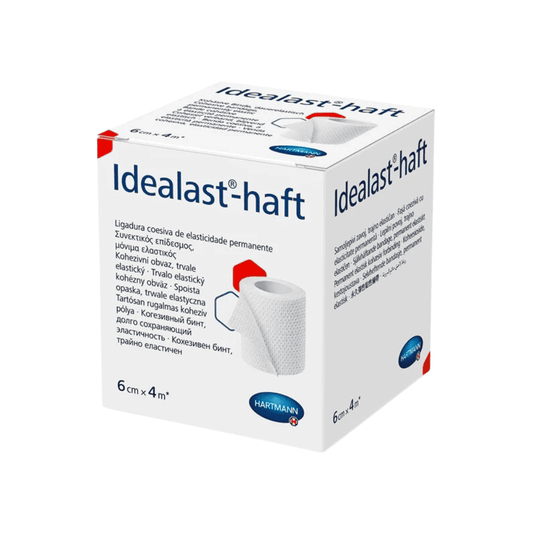
Up to 35% offVendor:Paul Hartmann AGHartmann Idealast® custody, permanent elastic ideal bandage
Only 18 leftRegular price From ¥406 JPYSale price From ¥406 JPY Regular priceUnit price ¥41 per m¥623 JPY -
Up to 35% offVendor:Paul Hartmann AGHartmann Peha® -Lastotel® fixing sord, individually packed - 20 pieces
Regular price From ¥87 JPYSale price From ¥87 JPY Regular priceUnit price ¥30 per m¥132 JPY -
Up to 35% offVendor:BSN Medical GmbHBSN CUTICELL® Classic Sterile ointment compress with paraffin
Only 13 leftRegular price From ¥935 JPYSale price From ¥935 JPY Regular priceUnit price per¥935 JPY -
Up to 35% offVendor:Paul Hartmann AGHartmann Hydrofilm® Roll, transparent film association
Only 7 leftRegular price From ¥1,584 JPYSale price From ¥1,584 JPY Regular priceUnit price ¥298 per m¥1,584 JPY -
Vendor:Paul Hartmann AGHartmann Pur-Zellin®-Box, empty | Cardboard (1 pack)
Regular price ¥3,799 JPYSale price ¥3,799 JPY Regular priceUnit price per¥3,799 JPY -
Vendor:Meditrade GmbHMeditrade ABE® Tracheal, slot hole compress 8 x 10 cm | Pack (50 pieces)
Only 14 leftRegular price ¥1,058 JPYSale price ¥1,058 JPY Regular priceUnit price per¥1,058 JPY -
Up to 4% offVendor:Holthaus Medical GmbH & Co. KGHolthaus Ypsipor wound pavement, fleece
Only 25 leftRegular price From ¥1,144 JPYSale price From ¥1,144 JPY Regular priceUnit price per¥1,157 JPY -
Up to 35% offVendor:Holthaus Medical GmbH & Co. KGHolthaus YPSIPLAST® booklet, rigid
Regular price From ¥173 JPYSale price From ¥173 JPY Regular priceUnit price ¥68 per m¥267 JPY
Further categories
Wound Care for Professional Settings
Wound care encompasses products required for the treatment, coverage, and management of wounds in everyday professional practice. These include, among other things, compresses, bandages, wound dressings, fixation materials, and supplementary wound care supplies for first aid, nursing, medical practices, and healthcare facilities. A suitable selection supports structured procedures, hygienic work practices, and needs-based care for various types of wounds.
Especially in professional settings, wound care supplies must be readily available, stored in an organized manner, and selected appropriately for the specific application. Whether it’s a minor cut, postoperative care, a dressing change, or a first-aid situation: it is crucial that the material, size, and design are suitable for the respective application.
Classifying wound care by application
The requirements for wound care materials vary significantly depending on the work environment. In doctors’ offices and nursing facilities, the focus is often on regular dressing changes, hygienic coverage, and reliable fixation. In businesses, schools, government offices, or the food service industry, on the other hand, the focus is often on providing quick first aid for minor injuries.
The type of wound also influences the selection. For superficial injuries, adhesive bandages or simple dressing materials are often sufficient. For wounds with heavy exudate, sensitive skin, or larger wound areas, absorbent compresses, appropriate wound dressings, and suitable fixation solutions become more important.
What really matters when selecting wound care materials
Wound care should not be selected based solely on product type. What matters most is the role the material plays in the care process. Compresses, bandages, and wound dressings differ significantly in absorbency, size, adhesion, padding, and comfort of use.
Important selection criteria include:
- Wound size and type: Small cuts or abrasions require different materials than larger or more exudative wound areas.
- Absorbency: Gauze pads and absorbent wound dressings help absorb wound exudate and cover the wound.
- Sterility: Sterile products are important for many medical applications, especially when there is direct contact with the wound.
- Adhesion and fixation: Adhesive bandages, fixation bandages, or adhesive dressings should fit securely without placing unnecessary strain on the skin.
- Skin compatibility: Choosing the right material is especially important when changing dressings frequently or for sensitive skin.
- Handling: In nursing, medical practice, and first aid, materials that are readily available and easy to use are essential.
For basic care, for example, sterile non-woven compresses such as the BeeSana® Non-Woven Compresses, Non-Sterile – 100 Count are suitable when absorbent dressing material is needed for general applications. When selecting products, however, one should always consider whether a sterile or non-sterile version is required for the specific application.
Differences in wound care explained clearly
Wound Care includes products used directly for cleaning, disinfecting, or treating a wound. These may include wound disinfectants, compresses, and other materials that support the first step in proper wound care.
First aid refers to materials that must be readily available in the event of acute injuries. These include bandages, compresses, dressings, and supplementary products for first aid in the workplace, in facilities, or on the go.
Wound dressings are used to cover and protect wounds and to securely hold dressing materials in place. Depending on the design, a dressing can be absorbent, cushioning, adhesive, or particularly flexible
.Compresses are frequently used to cover wounds, clean them, or absorb wound exudate. They are available in various sizes, layers, and designs. The key factors here are absorbency, size, number of layers, and whether a sterile or non-sterile version is required.
Band-Aids are particularly practical for minor injuries and spot wound coverage. They can be applied quickly and are available in various sizes, materials, and designs.
Important characteristics for professional use
In daily practice, wound care must be reliable, hygienic, and well-organized. The following are particularly important:
- Quick access: Wound care supplies should be clearly sorted and stored within easy reach.
- Appropriate sizes: Different wound areas require different product dimensions.
- Secure coverage: Wounds should be protected from external influences.
- Convenient packaging: Individually packaged items ensure hygienic removal.
- Predictable restocking: Supplies should be replenished in a timely manner, especially in high-traffic areas.
Especially with regularly used dressing materials, a well-organized selection can help simplify processes in nursing, medical practices, and first aid. For applications requiring sterile compresses, for example, Hartmann ES Compresses in various sizes, 8-ply, sterile, are suitable.
Distinguishing Between Sterile and Non-Sterile Products
In wound care, distinguishing between sterile and non-sterile products is particularly important. Sterile compresses and wound dressings are individually or protectedly packaged and are frequently used when the material comes into direct contact with the wound. Depending on the application, non-sterile products may be suitable for supplementary tasks, padding, or general care steps.
Specific suitability always depends on the product in question, the application, and the applicable guidelines in the work area. Product information regarding sterility, size, material, and packaging should therefore be carefully considered.
Selecting Wound Care Based on the Setting
In doctors’ offices and outpatient clinics, Sterile compresses, bandages, fixation materials, and wound care products are frequently needed. Clear procedures, hygienic dispensing, and appropriate sizes for various treatments are essential.
In care facilities, the focus is often on regular care. Here, absorbent compresses, skin-friendly fixation materials, and consumables that are easy to store are particularly important. For flexible dressing solutions, the Meditrade ABE® Last® adhesive fixation bandage can be used, for example, when dressing materials need to be held securely in place.
In businesses and administrative settings, first aid plays a central role. Bandages, dressing materials, and compresses should be quickly accessible and suitable for typical everyday injuries.
In the food service industry, kitchens, and food-handling areas, well-adhering bandages and readily available first-aid products are important, as minor cuts can occur during daily work
. In laboratories, industry, and logistics, robust, readily accessible, and clearly organized wound care supplies are essential. Depending on the activity, bandages, dressings, and first-aid supplies can be effectively combined for initial treatment.
Use and Handling in Daily Life
Wound care supplies should be stored in a clean, dry, and protected area. Sterile products must remain in undamaged packaging until use. When changing dressings, clear preparation is helpful so that all necessary materials are ready and interruptions are avoided.
Regularly checking first-aid supplies is also important. Used or damaged products should be replaced promptly so that wound care supplies remain fully available when needed. For minor injuries in everyday work, bandages like the Hansaplast Classic Bandage can be a practical addition.
Suitable products and supplements for wound care
For well-coordinated wound care, various product groups can be effectively combined: