
-

 Vendor:Swirl
Swirl Heavy load sacks professional with train band 60 l tearproof & tight | Role (12 bags)
Features: LDPE
Unit price: ¥61¥61 / pieceRegular price ¥731 JPY ¥731 JPYSale price ¥731 JPY ¥731 JPY Regular priceUnit price ¥0 per¥731 JPY ¥731 JPYplus shipping
-

 Vendor:Swirl
Swirl Heavy load sacks professional with train band 240 l tearproof & tight | Role (5 bags)
Features: LDPE
Low stockUnit price: ¥220¥220 / pieceRegular price ¥1,099 JPY ¥1,099 JPYSale price ¥1,099 JPY ¥1,099 JPY Regular priceUnit price ¥0 per¥1,099 JPY ¥1,099 JPYplus shipping
-

 Vendor:Swirl
Swirl Heavy-duty sacks professional with train tape 120 l tearproof & tight | Role (12 bags)
Features: LDPE
Unit price: ¥90¥90 / pieceRegular price ¥1,083 JPY ¥1,083 JPYSale price ¥1,083 JPY ¥1,083 JPY Regular priceUnit price ¥0 per¥1,083 JPY ¥1,083 JPYplus shipping


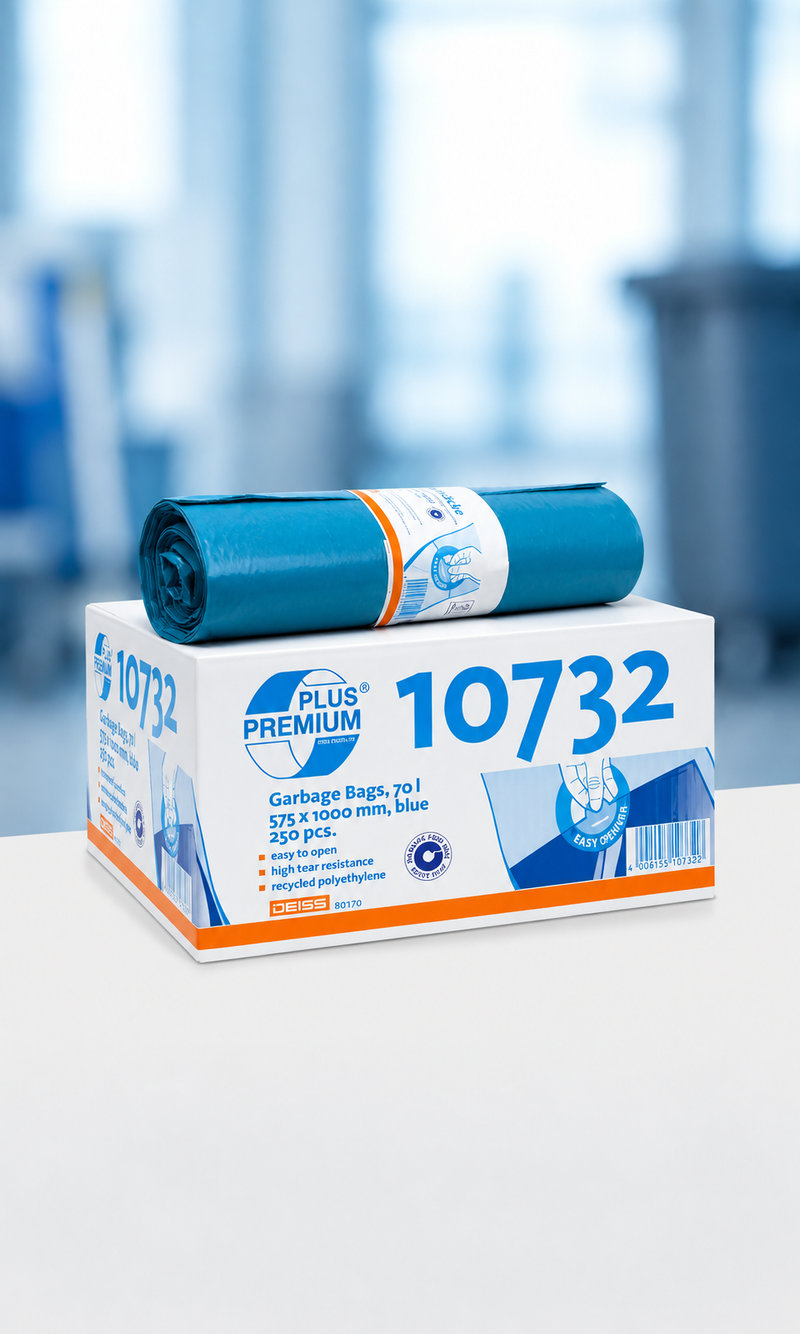


Heavy-duty bags for professional use
Heavy-duty bags are designed for demanding waste disposal tasks and are used wherever particularly heavy, bulky, or hazardous waste is generated. As part of the expanded range of trash bags and liners, they provide the solution for especially high demands. They offer a reliable solution for work environments where conventional trash bags reach their limits. Thanks to their high load-bearing capacity, they help ensure safe and efficient waste disposal processes.
Typical applications for heavy-duty bags include industrial and manufacturing facilities, the construction industry, workshops, and building cleaning services. They are also indispensable in logistics centers or waste management services when large or heavy volumes of waste are generated. Especially in areas with high material volumes, they ensure stable and safe operations.
In everyday work, heavy-duty bags support reliable waste collection and reduce the risk of damage or leaks. As a result, they contribute significantly to workplace safety and compliance with operational standards.
Features and Benefits of Heavy-Duty Bags
Heavy-duty bags are specifically designed for high mechanical loads and are characterized by particularly robust materials and reinforced construction. Within the category of trash bags & garbage bags, they are specifically engineered for extreme conditions. They enable the safe containment of even heavy or sharp-edged waste and can be flexibly integrated into various applications.
Advantages at a glance:
- High tear resistance for heavy and bulky waste
- Durable materials for demanding applications
- Suitable for construction waste, production scraps, or mixed materials
- Safe handling during filling and transport
- Supports stable and reliable disposal processes
The product range includes items such as Swirl Heavy-Duty Bags Profi with Drawstring 120, which are characterized by their durable construction and ease of use. Also relevant are Swirl Heavy-Duty Bags Profi with Drawstring 240, which are suitable for particularly large and heavy waste volumes and support safe disposal.
This product selection demonstrates that heavy-duty bags are a reliable solution for meet demanding waste disposal requirements and integrate seamlessly into existing workflows.
Application and Technical Guidelines for Heavy-Duty Bags
To ensure safe use, heavy-duty bags should be selected based on the specific load. Proper coordination within the overall system of trash bags and liners supports optimal use. Factors such as weight, material properties, and volume of the waste play a decisive role. A suitable selection helps ensure stability during use and minimizes risks.
In practical use, care should be taken to fill the bags evenly and avoid overloading. Especially with sharp-edged or heavy materials, careful handling is recommended to avoid unnecessary strain on the material structure. Secure sealing also facilitates transport and further processing.
Storage should also be organized. Heavy-duty bags should be stored in a dry and protected location to preserve their material properties over the long term. In areas with regular demand, proactive stockpiling supports smooth operations.
Disposal must be carried out in accordance with the respective waste type and applicable regulations. Clear organization of processes helps ensure long-term safety and efficiency in the work environment.
Complementary product categories for robust waste disposal solutions
Heavy-duty bags can be effectively combined with other product categories to design comprehensive and efficient waste disposal processes in the workplace. Coordinated equipment supports safe and structured workflows.
- Garbage bags up to 20 liters
- Garbage bags up to 69 liters
- Garbage bags from 70 liters
- Waste bags from 120 liters
Rely on coordinated solutions that deliver reliable results even under heavy loads and integrate seamlessly into existing work processes. A reliable foundation of compatible components helps ensure safety, efficiency, and order throughout the entire work environment on a long-term basis.


