Disposable

4 of 321 products

  • A box of medium-sized, violet-blue Altruan NITRIL350 nitrile examination gloves with outstanding features such as being powder-free, latex-free, and compliant with EN ISO standards.
    Vendor:
    Altruan

    Altruan Nitril350 Nitrile gloves, disposable gloves, blue - 100 pieces

    23 total reviews

    Regular price ¥783 JPY
    Sale price ¥783 JPY Regular price ¥783 JPY
  • A box of Altruan Nitrile 350 Black disposable gloves (black) from BINGOLD GmbH + Co. KG: Size 7S, latex-free, non-sterile, powder-free—100 gloves per box with a black/green design.
    Vendor:
    Altruan

    Altruan Nitril 350 Black, one -off gloves, black

    4 total reviews

    Regular price ¥783 JPY
    Sale price ¥783 JPY Regular price ¥783 JPY
  • A box of Altruan Vinyl 450 disposable gloves, clear, size 7S, contains 100 latex- and powder-free disposable gloves. Complies with EN 455 and ISO 374 standards. Brand: Altruan.
    Vendor:
    Altruan

    Altruan Vinyl 450 Gloves, disposable gloves, transparent - 100 pieces

    1 total reviews

    Regular price ¥555 JPY
    Sale price ¥555 JPY Regular price ¥555 JPY
  • A box of Altruan Latex 500 disposable gloves, natural, size 7S. Contains 100 gloves; powder-free and non-sterile. Product details in German and English. Ideal for anyone looking for high-quality Altruan Latex gloves.
    Vendor:
    Altruan

    Altruan Latex 500 gloves, disposable gloves, natural - 100 pieces

    2 total reviews

    Regular price ¥865 JPY
    Sale price ¥865 JPY Regular price ¥865 JPY

Disposable Gloves for Hygiene, Protection, and Professional Workflows

Disposable gloves are used wherever hygienic work practices, skin protection, and controlled handling of materials are important. They are used in medical facilities, healthcare settings, doctors’ offices, laboratories, cleaning areas, cosmetology, food processing, industry, and many other work environments. In this collection, you’ll find disposable gloves for a variety of needs—from short tasks requiring frequent glove changes to applications where comfort, tactile sensitivity, or material resistance are more critical.

The right choice depends primarily on the area in which the gloves will be used, the substances being handled, and how long they are intended to be worn. Disposable gloves differ in terms of material, fit, elasticity, skin compatibility, color, and packaging size, among other factors. Therefore, they should not be selected based solely on price or size, but rather according to the specific application and the requirements of daily work.


Features and Benefits of Disposable Gloves

Disposable gloves support hygienic work processes and help prevent direct skin contact with dirt, liquids, or certain work materials. They are intended for single use and are discarded after use. This makes them particularly suitable for areas where regular glove changes are necessary.

An important advantage is their ease of use: The gloves are readily available, are easy to put on depending on the model, and can be selected in various sizes to ensure a proper fit. Depending on the material, they offer different properties in terms of elasticity, tactile sensitivity, tear resistance, and comfort. This allows disposable gloves to be specifically tailored to the respective work area.

Typical advantages of disposable gloves include:

  • hygienic working conditions in everyday use
  • protection against direct skin contact
  • Quick glove changes are possible
  • various materials available
  • Suitable for many applications
  • Various sizes and colors
  • Convenient packaging units

In practical use, it’s important that the gloves are suited to the task at hand. For short cleaning tasks, different characteristics may be important than for tasks requiring a high degree of tactile sensitivity or extended wear. The right selection facilitates clean, organized, and comfortable workflows.


Which disposable gloves are best suited for which application?

Nitrile gloves are frequently used for medical and nursing tasks, as they offer a good combination of durability, tactile sensitivity, and material resistance. One example from our product range is the Meditrade NextGen® EN 455 Nitrile Gloves, powder-free. They are particularly suitable for areas where powder-free disposable gloves are required and where clear color-coding can be useful.

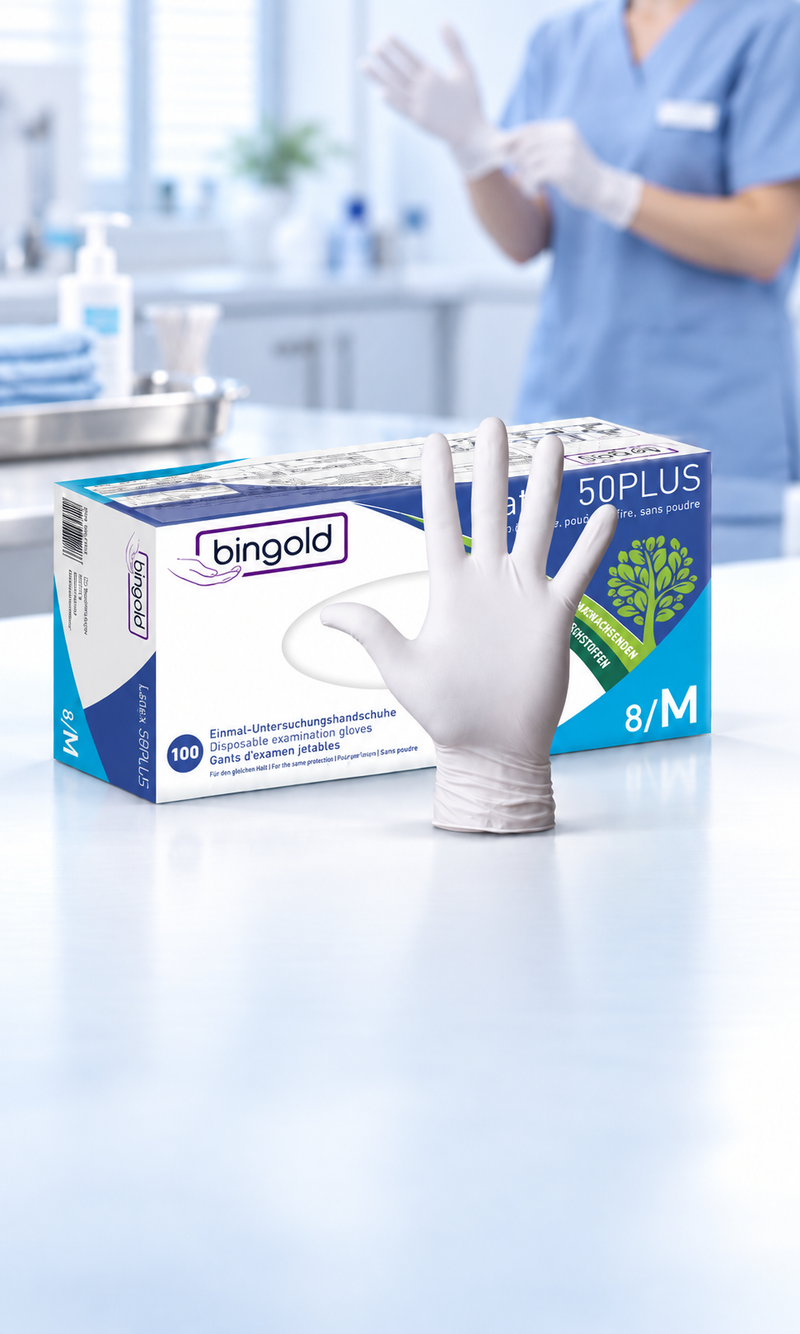
Latex gloves are often used where an elastic fit and good tactile sensitivity are important. The Bingold Latex 50PLUS latex gloves in white are an example of latex gloves that may be suitable for tasks where dexterity and a comfortable fit are priorities. However, when using latex, it’s important to always keep in mind that some people may have latex sensitivities or allergies.

Vinyl gloves are particularly suitable for simple, short-term tasks involving low mechanical stress. The Meditrade Vinyl 2000 PF disposable vinyl gloves, for example, can be used for simple care, hygiene, cleaning, or preparation tasks when there are no particularly high demands for elasticity or tear resistance.


What should you look for when buying disposable gloves?

When purchasing disposable gloves, the intended use is the primary consideration. For medical, nursing, or hygiene-sensitive tasks, the specified standards, manufacturer’s instructions, and usage recommendations should be strictly followed. For cleaning tasks, simple protective duties, or short-term applications, other criteria may be more important, such as material, comfort, and cost-effectiveness.

The right size also plays a major role. If gloves are too tight, they can be uncomfortable or tear more easily. If they are too loose, tactile sensitivity and the safe handling of small objects are compromised. Therefore, disposable gloves should be chosen in the appropriate sizes, especially if they are worn regularly or for extended periods.

Other important factors include material compatibility, powder-free status, color, and package size. Powder-free gloves are often preferred because they can reduce residue on hands or materials. Colors like blue are frequently used in hygienic or food-contact areas because they are highly visible. Larger package sizes are practical when gloves are used in large quantities on a daily basis.


Nitrile, latex, vinyl, or Vitril—which disposable gloves are the right choice?

Nitrile gloves are considered a versatile solution for many professional applications. They are latex-free, generally more durable than vinyl, and, depending on the model, offer good tactile sensitivity. For this reason, they are frequently used in medicine, nursing, laboratories, cleaning, and industry.

Latex gloves stand out primarily for their high elasticity and snug fit. They can be particularly comfortable when precise work is required. At the same time, latex is not suitable for all users, as latex allergies or sensitivities must be taken into account.

Vinyl gloves are a cost-effective choice for simple, short-term tasks involving low stress. They are less elastic than latex or nitrile but work well for simple hygiene, care, or cleaning tasks when no high mechanical stress is expected.

Depending on the design, nitrile gloves combine the properties of various materials and are often used as an alternative for simple to moderate applications. They can be a good option when seeking a good balance between price, comfort, and basic protection. Which type is best suited always depends on the specific application, the duration of wear, and the requirements for material resistance.


Usage and Guidelines for Disposable Gloves

Disposable gloves should always be put on with clean, dry hands. Before use, it is advisable to check for visible damage. Damaged gloves should not be used, as they cannot reliably fulfill their protective function. After use, disposable gloves should be disposed of properly and not reused.

When worn for extended periods or changed frequently, attention should be paid to skin compatibility and proper sizing. Furthermore, gloves do not generally replace other hygiene measures. Depending on the work environment, hand hygiene, disinfection, surface cleaning, or additional protective clothing may be required.

Gloves should be stored in a dry, clean place, protected from direct sunlight. Manufacturer’s specifications regarding shelf life, standards, material properties, and usage limits should always be followed, especially in medical, nursing, or safety-related settings.


Complementary Products for Disposable Gloves

These complementary categories help ensure a complete set of supplies for hygienic and organized workflows. While disposable gloves reduce direct skin contact, the right cleaning and disinfectant products help keep surfaces, hands, and work areas clean. Products from the practice supplies and hygiene & care categories are valuable additions to daily use, especially in professional settings with high consumption rates.

What size disposable gloves do I need?

The right size for disposable gloves depends on the size of your hands. Measure the circumference of your palm and use a manufacturer's size chart to determine the appropriate size.

What colors do disposable gloves come in?

Disposable gloves are available in a variety of colors including white, blue, black, green and transparent.

Sterile or non-sterile? - Which gloves do I use and when?

Sterile gloves are used in environments with a high risk of infection, such as operating rooms. Non-sterile gloves are used for general purposes where sterility is not required, such as cleaning or handling non-sterile materials.

Do I have to disinfect disposable gloves?

Disposable gloves are already sterile or disinfected when they are removed from the packaging. After use, they are discarded and not reused. It is not necessary to disinfect disposable gloves as they are intended for single use.